
The “WHY“ behind the shift: 1D to 2D Transition - GS1 Sunrise 2027
Product Spolight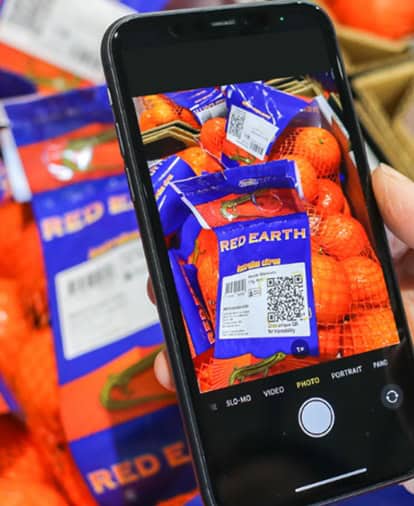
Consumer Expectations
Growing consumer expectations and regulatory demands now require far more detailed product information than 1D barcodes can hold.
Surveys show strong consumer appetite for transparency:
→77% consider product information important when buying
→62% will pay more for products with detailed information
→79% are more likely to purchase items with scannable QR codes providing extra details
Consumers most want information on nutrition, materials and ingredients, safety, allergens, certifications, origins, recycling, and recall alerts.
To meet these needs, the industry is moving toward GS1 selected 2D codes
1D vs 2D Barcodes
Current 1D Barcodes World
Total of Four Identifiers:
- Country
- Manufacturer
- Product
- Check Digit
(No digital features)
Transition to 2D Codes World
Digital labeling & Regulation compliance
Code contains a link to the company webpage for detailed product information
Full supply-chain traceability
The expiration date, the batch number, the country of origin, or recycling instructions…. hundreds to thousands of characters

Transition to 2D Codes World
Digital labeling & Regulation compliance
Code contains a link to the company webpage for detailed product information
Full supply-chain traceability
The expiration date, the batch number, the country of origin, or recycling instructions…. hundreds to thousands of characters
Loyalty & rewards programs
Direct end-consumer conversation, e.g. with customer APP on the phone to scan the code.
GS1 Sunrise 2027
Who is GS1
GS1 is a global non-profit organization that develops and maintains international standards for business communication, most notably the barcode system (GTIN) used to uniquely identify and track products worldwide.
What is sunrise 2027
Sunrise 2027 is a global initiative led by GS1 to transition from traditional 1D barcodes to 2D barcodes, such as QR codes or Data Matrix codes
The Goal: By the end of 2027, retailers worldwide are expected to have upgraded their scanning systems to process both 1D and 2D barcodes.
The Benefit: significantly more data, including expiration dates, batch numbers, sustainability info, and direct links to digital brand experiences for consumers.
The Transition: During this “Sunrise” period, many brands are using “dual labeling” (printing both types of codes on one package) to ensure compatibility while the industry catches up.
What is SICK strategy
SICK focuses on providing advanced sensor technology that enable businesses to seamlessly transition from traditional 1D barcodes to data-rich GS1-compliant 2D codes.
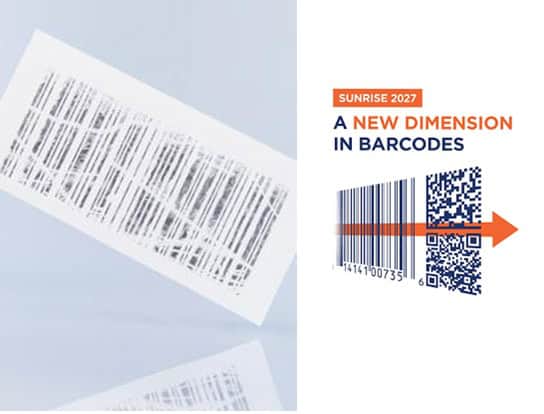
Manufacturers, what does this mean to you?
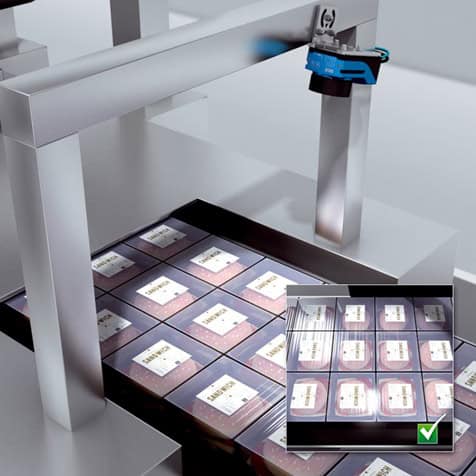
Manufacturers:
→Need to choose appropriate 2D data carriers — QR Code Powered by GS1 or GS1 DataMatrix.
→Must determine what additional product data to include (e.g., expiry date, lot, serial).
→Should assess required technology and process changes, especially for real-time vs. pre‑printed packaging.
→Adoption of GS1 Digital Link is essential to connect consumers to digital product content via smartphone scan.
→What this means for you?
→It’s time to upgrade your hardware. SICK can provide the necessary scanner solutions and compliance expertise to ensure your systems meet GS1 requirements and keep you operational before the 2027 deadline. Don’t wait until the last minute—industry-wide adoption has already begun.
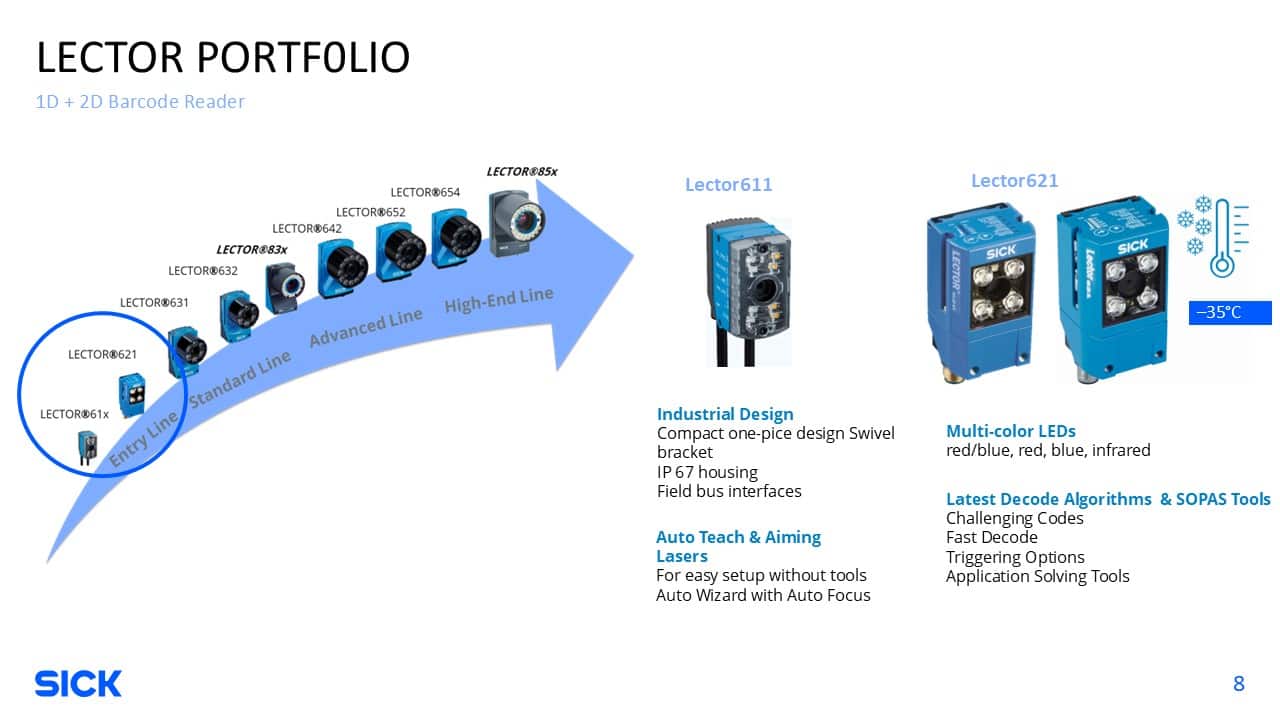
Lector Barcode Solution

1D + 2D barcode solution
Reading 2D codes
Lectors decode common 2D codes such as Data Matrix, QR Codes, and Digimarc, ensuring reliable reading such as poor print quality, low contrast, or high‑speed motion.
Digital link
Is a standardized web address (URL). By embedding GS1 identifiers into this URL, a simple product code is turned into a multipurpose gateway to both retail point-of-sale data and rich online consumer content. It is the foundation for future data‑rich user journeys.
Application Identifiers (AI) Parsing
Lectors automatically break down a continuous code string into distinct, usable data fields like GTIN, batch number, and expiration date….
Grading (Code quality)
Lectors provide the code quality checking on the basis of ISO/IEC 16022, ISO/IEC 15415, ISO/IEC 15416, ISO/IEC 18004

Ask an Engineer
By the end of 2027, traditional 1D barcodes such as EAN/UPC are set to begin being replaced by 2D codes, including the QR Code powered by GS1 and GS1 DataMatrix. The transition to 2D codes is a great step for industries that adhere to the GS1 standard, opening up opportunities to encode more data in a smaller, more flexible package. It’s important, though, that companies stay current with 2D-capable readers and traceability technologies that take advantage of these new capabilities.
Ready to learn more?
Mechatronic Solutions offers local support, inventory, and expertise to help you with your 1D to 2D barcode implementation. Complete the form below, and one of our application experts will reach out to assist you within 24 hours.